
BPC-157 Research: What the Current Scientific Literature Actually Shows
Introduction
BPC-157 has become one of the most searched and most studied research peptides in laboratories around the world. Originally isolated from a protective protein found in human gastric juice, this synthetic pentadecapeptide has attracted significant scientific attention for its potential applications across cellular biology, regenerative research, and gut health studies. For researchers working with BPC-157, understanding the depth and direction of the current literature is essential before designing any experimental protocol.
This article examines what published research actually demonstrates about BPC-157, the proposed mechanisms behind its observed effects, and why purity and documentation matter enormously when sourcing this peptide for laboratory use.
What Is BPC-157
BPC-157, short for Body Protective Compound 157, is a synthetic peptide consisting of 15 amino acids. It was developed by isolating and stabilizing a naturally occurring protective compound found in the human stomach. Unlike many peptides that require careful temperature control to remain stable, BPC-157 has demonstrated notable stability across a range of conditions, which is part of why it has become such a popular subject for laboratory research.
The molecular weight of BPC-157 sits at approximately 1419.5 Daltons, with a chemical structure that researchers have mapped extensively using HPLC and mass spectrometry analysis. This level of structural characterization is part of why independent verification through Certificate of Analysis documentation matters so much when acquiring this peptide for research purposes.
Key Areas of Scientific Interest
Gastrointestinal Research
Given its origin in gastric protective mechanisms, much of the early research into BPC-157 focused on gut tissue models. Studies have examined how the peptide interacts with tissue lining in various experimental settings, with particular interest paid to its potential role in models of gastric ulceration and intestinal barrier function.
Tissue and Tendon Models
A substantial body of research has explored BPC-157 in the context of connective tissue and tendon healing models. Researchers have been particularly interested in angiogenesis, the process by which new blood vessels form, since this plays a critical role in how tissue repairs itself in laboratory models. Multiple animal studies have examined tendon-to-bone healing processes where BPC-157 was introduced as a variable.
Cellular Migration Studies
Cell migration assays have shown interesting patterns when BPC-157 is introduced into in-vitro models, with researchers noting effects on how certain cell types move and proliferate. This has made BPC-157 a frequent subject in studies exploring wound healing pathways at the cellular level.
Proposed Mechanisms of Action
While research is ongoing, several mechanisms have been proposed to explain the effects observed in BPC-157 studies. One leading theory involves the peptide’s interaction with the VEGFR2 pathway, which is closely tied to blood vessel formation. Other research has pointed toward modulation of nitric oxide pathways, which play a role in vascular function and tissue repair signaling.
It is worth noting that despite the volume of preclinical research, BPC-157 has not been approved by the Therapeutic Goods Administration or any equivalent regulatory body for human therapeutic use. All current understanding comes from laboratory and animal model research, which is exactly why it remains classified strictly as a research compound.
Why Purity Matters for BPC-157 Research
Because BPC-157 research often involves precise dosing within experimental models, even small variations in peptide purity can introduce confounding variables into results. A product listed at 95 percent purity versus 99 percent purity is not a minor difference when reproducibility is the goal of any serious research protocol.
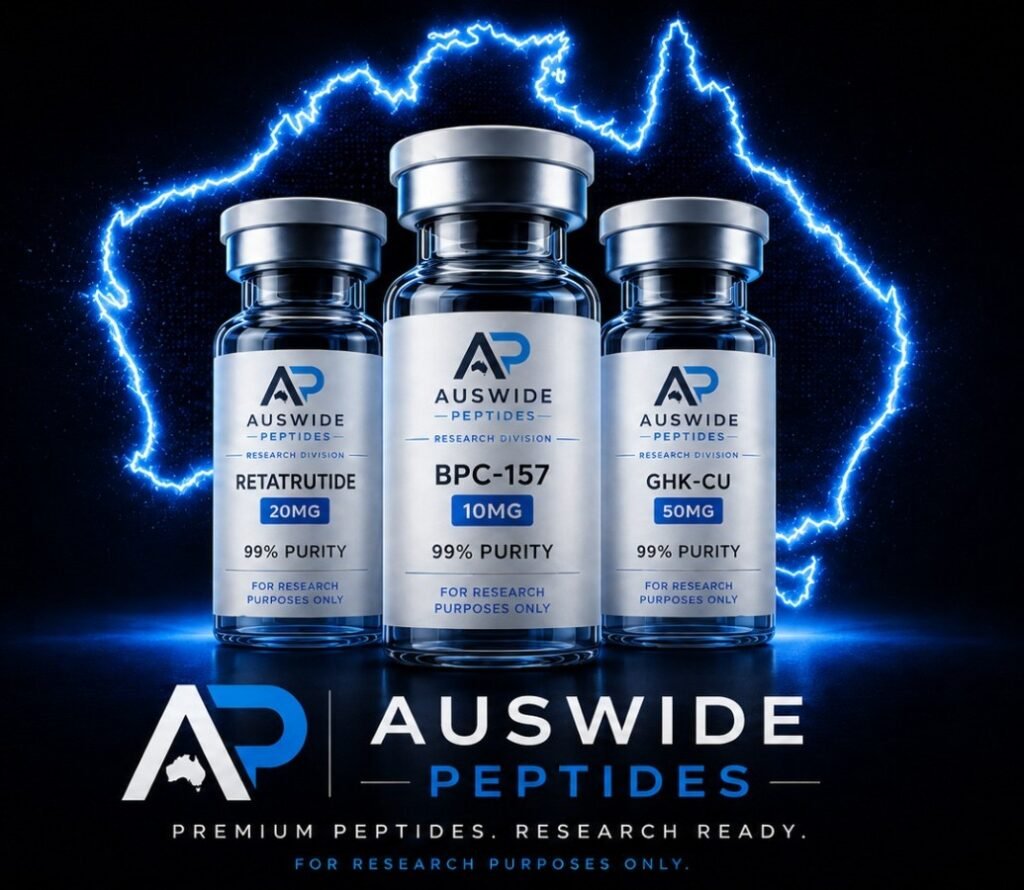
This is why every BPC-157 product supplied by Auswide Peptides ships with a batch specific Certificate of Analysis confirming identity through HPLC testing, exact purity percentage, peptide content, water content, and physical appearance. Researchers using our BPC-157 10mg vials can trace every result back to the exact production batch tested by an independent third party laboratory.
Reconstitution Considerations for BPC-157
For researchers preparing BPC-157 for laboratory use, proper reconstitution technique directly affects the integrity of results. Bacteriostatic water is the standard solvent recommended for reconstitution. The lyophilised powder should never be shaken or vortexed, as aggressive agitation can degrade the peptide structure. Instead, solvent should be added slowly along the inside wall of the vial, followed by gentle swirling until fully dissolved.
Once reconstituted, BPC-157 solutions are generally stable for four to eight weeks when stored at 2 to 8 degrees Celsius. For longer term storage, aliquoting into single use volumes and freezing at minus 80 degrees Celsius helps avoid the freeze thaw cycles that can compromise peptide stability over time.
Final Thoughts for Researchers
BPC-157 remains one of the most actively studied peptides in current research literature, with ongoing interest spanning tissue repair, gastrointestinal models, and cellular signaling pathways. As with any research compound, the quality of your results depends heavily on the quality of the material you start with.
Auswide Peptides supplies BPC-157 10mg as a lyophilised powder, independently tested to a minimum of 99 percent purity, with full batch documentation included on every order. Browse our full research peptide range to find batch certified BPC-157 ready for dispatch across Australia.