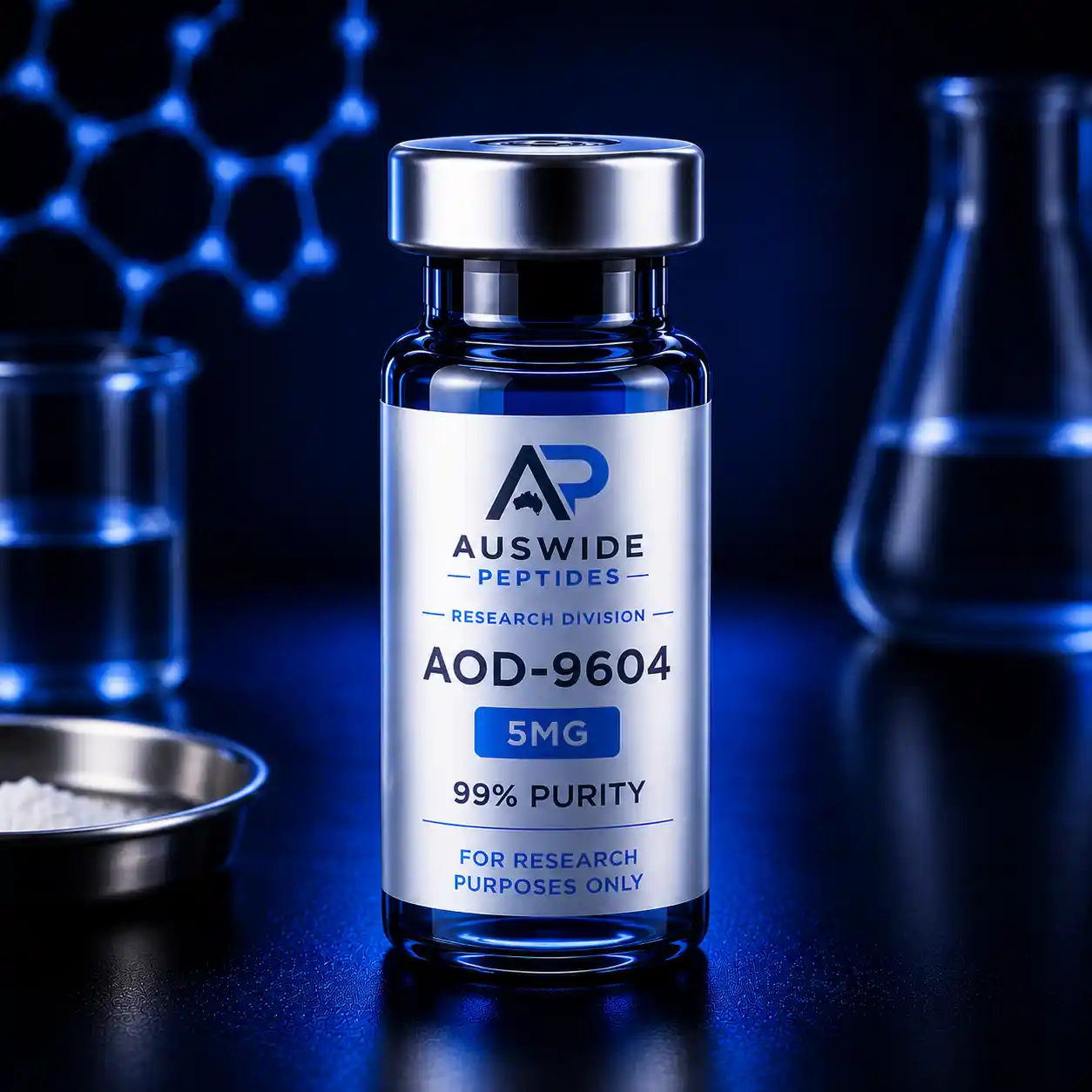
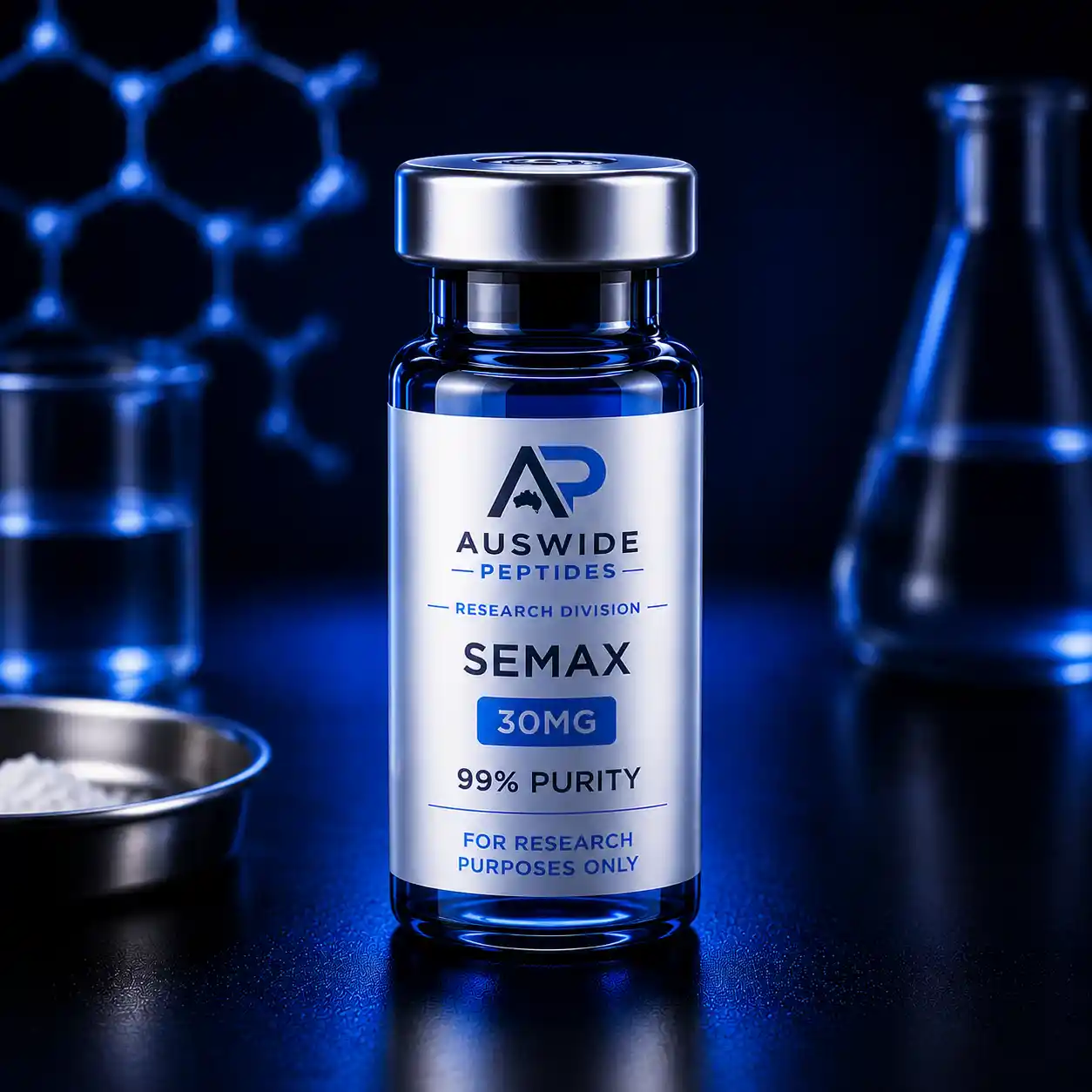
Modified fragment of human growth hormone for lipolysis and metabolic research. 5mg lyophilised powder. 99% purity. CoA included.
Product Details
AOD-9604 is a modified peptide analogue of the C-terminal fragment of human growth hormone (hGH176-191), engineered to retain lipolytic activity while removing growth-promoting effects. It is studied in research settings examining fat metabolism, adipogenesis inhibition, and metabolic regulation. Supplied as a 5mg lyophilised powder at ≥99% purity with batch CoA. Molecular weight 1,815.1 Da. Reconstitute with bacteriostatic water. Store 2–8°C. For research use only.
“Ordering process was clean and professional. The CoA matched exactly what I needed for documentation. Purity figures held up against our in-house testing. Will be reordering.”
JR
J. Reynolds
Independent Research Buyer, VIC
★★★★★
“The batch documentation is the best I’ve encountered from an Australian supplier. Transparent, complete, and the dispatch was genuinely fast. Exactly what I needed.”
JR
S. Morrison
Research Procurement, QLD
★★★★★
“Ordering process was clean and professional. The CoA matched exactly what I needed for documentation. Purity figures held up against our in-house testing. Will be reordering.”